По следам фильма "отель Гранд Будапешт"
А в этом году я решил пройти по местам боевой славы еще одного фильма, некоторые сцены из которого, были сняты недалеко от меня. Фильм этот, как вы поняли из заголовка, называется «отель Гранд Будапешт».

Cвою экскурсию я начал давно..ранней весной. Когда было время посещал по одному или по нескольку мест в день. Многие сцены фильма были сняты в Дрездене и в замках Саксонии. А основные съемки произошли в городе Герлиц, но туда я не добрался, ибо там не так красиво, по моему мнению, ввиду того, что ничем этот город не отличает от любого другого города Германии.
Итак Начнем. Знакомитесь. Сие есть Цвингер в городе Дрезден. Вот что говорит о ней вики
Вот так он выглядит в фильме (справа) и в жизни.



В двух шагах от цвингера была снята еще одна сцена фильма на фоне фрески «Саксонские короли».

Вот так она выглядит в жизни

С другой стороны

Следующей моей остановкой стал один из первых (если не первый) молочный магазин в Дрездене Pfunds Molkerei. Но фоткать там низяяя..так что довольствуемся тем, что есть.


И вот я перехожу с изначальной цели моего путешествия, которая в фильме выглядит вот так:

Это замок Burg Kriebstein, который находится не далеко от города Кемниц (бывший Карл Маркс Штадт). Подобных замков в саксонии- великое множество, ибо средневековая Саксония напоминала Российскую империю после 1917 года. Дохрена царьков, и каждый пытается урвать кусок земли. Правда, немецкие царьки считали, что просто так ухватить-нихт гут, и строили замки.
И вот наш замок сегодня (Фотка реально сегодняшняя)
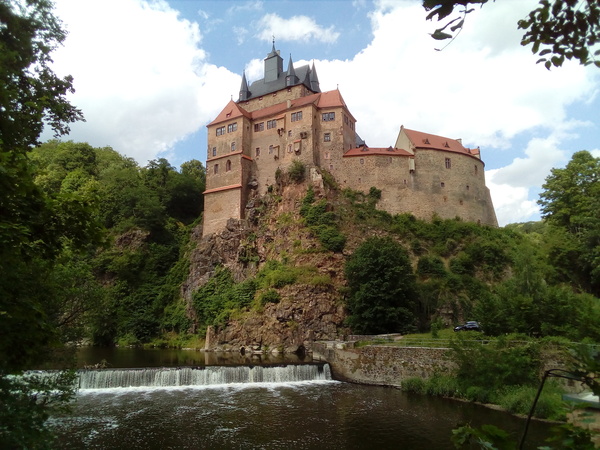
Внутри выглядит просто здорово.
Вот так там люди жили. Прошу обратить внимание на дверь справа. Сие есть..

Туалет типа «очко»

Это не подсветка там..Гадили просто людям на голову. Вот этот самый туалет, только с другой стороны

И последняя точка моего маршрута находится в Саксонской Швейцарии. Это место не зря выбрали режиссеры, ибо оно того стоит.

Сначала пару фоток этой самой Саксонской Швейцарии.
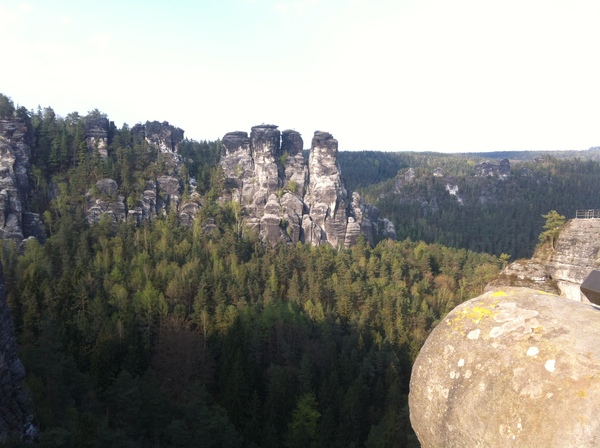
А вот и наш мост, только с другой стороны.
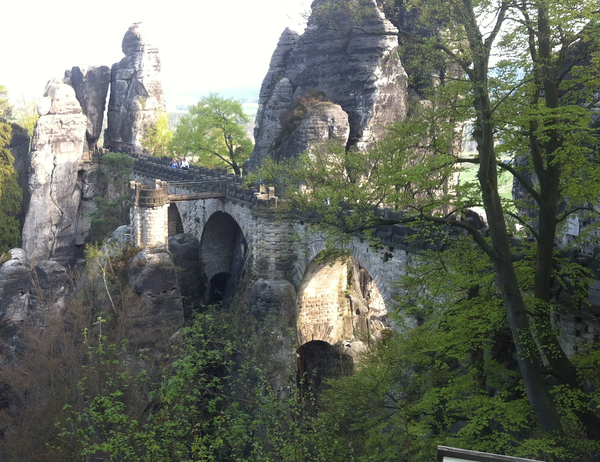
И вид на сам мост. К сожалению, без своего гордого затылка не смог найти фотку.
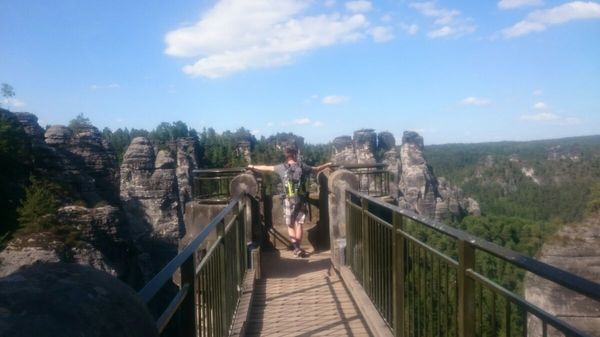
В следующий раз планирую посмотреть на место, где снимали «бесславных ублюдков».
al-Shabaab
Our editors will review what you’ve submitted and determine whether to revise the article.
Our editors will review what you’ve submitted and determine whether to revise the article.
Recent News
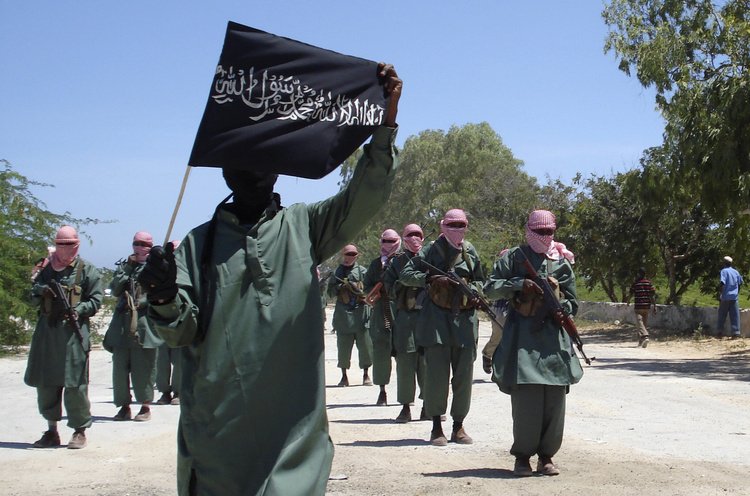
al-Shabaab, (Somali: “the Youth”) also spelled al-Shabab, Arabic in full Ḥarakat al-Shabāb al-Mujāhidīn, Somali-based Islamist militant group with links to al-Qaeda. Beginning in 2006, the group waged an insurgency against Somalia’s Transitional Federal Government (TFG).
Al-Shabaab originated as a militia affiliated with the Islamic Courts Union (ICU), a federation of local and clan-based Islamic courts that had been founded in southern Somalia in 2004 to combat the lawlessness and banditry afflicting the area since the collapse of the government of Mohamed Siad Barre in 1991. From about 2004 this militia acted as an armed wing of the ICU, incorporating fighters from the disbanded Somali militant Islamist group al-Itihaad al-Islamiyyah as well as a number of fighters who had fought for the al-Qaeda network or received training from it. The group came to be known as al-Shabaab, meaning “the Youth,” and it was led by Aden Hashi Farah Ayro, a Somali operative reportedly trained by al-Qaeda in Afghanistan. Ideologically, al-Shabaab took a more extreme stance than the ICU as a whole, espousing a puritanical version of Islam at odds with the Sufi-influenced form practiced by many Somalis.
In early 2006 al-Shabaab fighters played a prominent role supporting the ICU in combat against a coalition of Mogadishu warlords that the United States covertly supported in an attempt to prevent the spread of militant Islamism. The ICU defeated the warlords and took control of Mogadishu in June 2006. That month the ICU also changed its name to Somali Supreme Islamic Courts Council (SSICC). The victory strengthened al-Shabaab, allowing fighters to take possession of arsenals belonging to the warlords. The SSICC’s takeover in Mogadishu was a threatening development for the TFG, then operating from Kenya and the Somali city of Baydhabo, and for the TFG’s international supporters, especially the United States, which feared that the SSICC would provide a haven for al-Qaeda.
International intervention came at the end of 2006, when a U.S.-backed Ethiopian force joined with TFG troops to fight the SSICC, which was quickly defeated and dissolved. Al-Shabaab, however, remained intact and began to mount a campaign of bombings and attacks against the TFG and Ethiopian forces in Somalia. Civilians, journalists, and international aid workers also became targets for attacks, as did the African Union peacekeeping force ( AMISOM) authorized by the UN Security Council in February 2007. The death of Ayro in a U.S. air strike in 2008 did little to slow al-Shabaab’s insurgency. In October 2008 the TFG signed a power-sharing agreement with members of the former SSICC, providing for the incorporation of moderate Islamists into the government. Al-Shabaab, still fiercely opposed to any compromise with the TFG, denounced the agreement even though it set a timetable for the withdrawal of Ethiopian troops from Somalia.
Al-Shabaab continued to extend the area under its control in 2009, banning behaviours that it deemed un-Islamic and implementing punishments including beheading, stoning, and amputation for offenders. In July 2010 al-Shabaab suicide bombers staged the group’s first major attack outside Somalia, killing about 75 people gathered in Kampala, Uganda, to watch a screening of a World Cup football (soccer) game. Al-Shabaab claimed the attack as retaliation for Ugandan troops’ participation in AMISOM. Al-Shabaab drew further international condemnation for first banning and then restricting assistance from international aid groups in southern Somalia during a deadly drought and famine in 2011.
By mid-2011 al-Shabaab appeared to be on the defensive. Worn down by repeated clashes with AMISOM forces, the group retreated from Mogadishu in August 2011. In October 2011 the group was forced to fight on a second front when several thousand Kenyan soldiers entered southern Somalia in response to a series of alleged al-Shabaab attacks and kidnappings in Kenya. The Kenyan force in Somalia officially merged with AMISOM in June 2012, and an AMISOM offensive in October of that year succeeded in driving al-Shabaab out of Kismaayo, the port city that had been the group’s last urban stronghold.

In February 2012 a video released jointly by al-Shabaab and al-Qaeda announced that al-Shabaab had formally pledged allegiance to the al-Qaeda network.
Al-Shabaab launched its deadliest attack outside of Somalia in several years on September 21, 2013, when militants stormed a shopping mall in Nairobi, killing at least 65 people. Kenyan police cornered the gunmen in the shopping mall, resulting in a siege that lasted several days.
On April 2, 2015, al-Shabaab struck again in Kenya, killing more than 140 people and injuring dozens more in a raid on a university in Garissa.
Джебель Ахдар (Оман) — Jebel Akhdar (Oman) — Wikipedia

В Джебель Ахдар или же Аль-Джабаль Аль-Ахдар (арабский: ٱلْجَبَل ٱلْأَخْضَر , романизированный: Аль-Джабаль Аль-Ахар, горит 'Зеленая гора'), является частью Горы Аль-Хаджар диапазон в Мухафаза Ад-Дахилия из Оман. Он поднимается на высоту 2980 м (9780 футов). [1] и охватывает плато Сайк на высоте 2000 м над уровнем моря. Джебель-Ахдар знаменит своим лабиринтом вади и террасные сады, где из-за мягкого средиземноморского климата в изобилии растут гранаты, абрикосы и розы.
Содержание
Описание
Это в основном известняк [2] гора — одна из самых высоких точек в Омане и восточная Аравия. Джебель-Ахдар находится в центральной части хребта Аль-Хаджар, примерно в 150 км (93 миль) от Маскат и доступный только с полным приводом. [3] Ассортимент в основном пустыня, но на больших высотах получает около 300 мм (12 дюймов) осадки ежегодно — достаточно влажный, чтобы позволить рост кусты и деревья и поддержка сельское хозяйство. [4] Именно поэтому горы называют их «зелеными». [5] [6]
Старая цитадель на внутренней стороне горы — Биркат аль-Мауз, или Бассейн подорожников, с планировкой, аналогичной расположенной поблизости. Жабрин дворец [7]
Биркат аль-Мауз, расположенный напротив зияющего устья большого перевала в горы, был одной из крепостей племени Бани Риям, которое контролировало центр гор. Обрушившаяся до недавнего времени в руины крепость из сырцового кирпича и ее расписные потолки сейчас находятся на пути к реставрации «.
Район находится примерно в 45 минутах езды от Низва и известен своими традиционными розовая вода добыча [8] [9] и сельскохозяйственная продукция, включая гранаты, грецкие орехи, абрикосы, чернить виноград и персики. Это также сайт пчела разведение на большей части территории Омана. [10] Сельскохозяйственное производство улучшается за счет использования Фаладж оросительные каналы и связанные с ними системы террас, разработанные местными фермерами, которые жили на этой горе в течение сотен лет. Аль Согара это историческая деревня, высеченная в склоне горы. [11] Джебель в основном населен древними Араб племя Бани Риям (аль-Риямы). [12] Большинство потомков племени сейчас проживают в четырех близлежащих деревнях, включая Низву, Изки и Ибра. [13]
История
Между 1954 и 1959 годами этот район стал местом Джебель Ахдар Война, конфликт между Оманские силы верен султан Омана (при поддержке британских солдат, в том числе Специальное воздушное сообщение ) и Саудовский -поддерживаемые повстанческие силы внутри страны Имамат Омана. [14]
В августе 2011 г. Султан Кабус назначил Джебель Ахдар естественный запас в попытке сохранить свое уникальное, но хрупкое биоразнообразие. Указ султана Кабуса учредил «Природный заповедник Джебель Ахдар». Министр по вопросам окружающей среды и климата уполномочен разрабатывать руководящие принципы, регулирующие доступ и деятельность по развитию в заповеднике. [15]
С 2011 года гора считается основным восхождением в Тур по Оману шоссейная велогонка. [16] В этом районе было обнаружено и изучено несколько важных памятников наскального искусства с фигурами, датируемыми 6000 лет назад. [17]
Al-Shabaab
 A military spokesperson for al-Shabaab issues a statement from south of Mogadishu. Feisal Omar/Reuters
- An insurgent group formed in the early 2000s, al-Shabaab seeks to establish an Islamic state in Somalia.
- The group is capable of carrying out deadly attacks across East Africa, despite suffering setbacks in recent years due to an AU-led military operation.
- The United States has sought to prevent al-Shabaab from destabilizing the Horn of Africa, and it has increasingly relied on air strikes against suspected fighters.
Introduction
Al-Shabaab, or “the Youth,” is an Islamist insurgent group based in Somalia. It held sway over the capital of Mogadishu in the late 2000s, but a military campaign led by the African Union (AU) and supported by the United States and other Western partners pushed it back from major population centers.
Still, the insurgency has proved resilient and remains the principal security challenge in war-torn Somalia. It controls large parts of the country’s south and continues to mount lethal attacks against international forces and civilians in the region. Meanwhile, al-Shabaab’s unyielding threat has repeatedly pushed the AU to reevaluate its withdrawal and complicated U.S. counterterrorism operations, which have ebbed and flowed in recent years.
What are the origins of al-Shabaab?
One of the most impoverished countries in the world, Somalia has seen militant groups come and go in its decades of political upheaval. Analysts say the forerunner of al-Shabaab, and the incubator for many of its leaders, was al-Ittihad al-Islami (AIAI, or “Unity of Islam”), a militant Salafi group that peaked in the 1990s, after the fall of Said Barre’s 1969–1991 regime and the outbreak of civil war. AIAI’s core was a band of Middle East–educated Somali extremists that was partly funded and armed by al-Qaeda’s chief, Osama bin Laden.
In the early 2000s, a rift developed between AIAI’s old guard, which had decided to create a political front, and younger members, who sought the establishment of a “Greater Somalia” under fundamentalist Islamic rule. The hard-liners eventually joined forces with an alliance of sharia courts known as the Islamic Courts Union (ICU) and served as its youth militia. Al-Shabaab and the ICU wrested control of the capital in June 2006, a victory that stoked fears in neighboring Ethiopia of spillover jihadi violence.
Al-Shabaab in East Africa
2004–2022
How did the group take shape?
A summary of global news developments with CFR analysis delivered to your inbox each morning. Most weekdays.
The World This Week
A weekly digest of the latest from CFR on the biggest foreign policy stories of the week, featuring briefs, opinions, and explainers. Every Friday.
Think Global Health
A curation of original analyses, data visualizations, and commentaries, examining the debates and efforts to improve health worldwide. Weekly.
Ethiopia, a majority-Christian nation, invaded Somalia in December 2006 and ousted the ICU from Mogadishu with little resistance. The intervention, which came at the request of Somalia’s transitional government, radicalized al-Shabaab, analysts say. After much of the ICU fled to neighboring countries, al-Shabaab retreated to the south, where it began organizing guerrilla assaults, including bombings and assassinations, on Ethiopian forces. Some experts say it was during these years that the group morphed into a full-fledged insurgency, gaining control over large pieces of territory in central and southern Somalia.
The Ethiopian occupation was responsible [PDF] for “transforming the group from a small, relatively unimportant part of a more moderate Islamic movement into the most powerful and radical armed faction in the country,” wrote Rob Wise, a counterterrorism expert. Addis Ababa said the intervention was a “reluctant response” to calls by the ICU for jihad against Ethiopia and its renewed territorial claims against both Ethiopia and Kenya. It has stressed that the intervention was supported by the United States and the AU, among others.
New Islamist-nationalist fighters swelled al-Shabaab’s ranks from around four hundred into the thousands between 2006 and 2008. The group’s ties to al-Qaeda emerged during this period. Al-Shabaab leaders praised the terrorist network and condemned what they characterized as U.S. crimes against Muslims worldwide. The State Department designated al-Shabaab a foreign terrorist organization in 2008, and al-Shabaab’s leadership declared allegiance to al-Qaeda in 2012.
Recent estimates [PDF] of al-Shabaab’s membership range between seven thousand and twelve thousand. The group regularly forces civilians, particularly children, to enter its ranks; other recruits join voluntarily, often for financial reasons.
What are its objectives?
Al-Shabaab broadly seeks to overthrow the central government, expel foreign forces from Somalia, and ultimately establish an Islamic state in accordance with its version of sharia. To build its legitimacy among Somalis, the group provides services [PDF] within its protection racket, such as dispute settlement, that the government has long struggled to deliver. “Mogadishu isn’t able to compete with what al-Shabaab has to offer in the areas where it’s been strongest,” says the American Enterprise Institute’s Katherine Zimmerman.
The group has also expressed transnational aims, though factions within al-Shabaab have diverged on what exactly those are. A more common goal is an Islamic state that brings together all of East Africa’s ethnic Somali areas, while a smaller subset of militants seeks expansion beyond the region and closer coordination with al-Qaeda.
In areas it controls, al-Shabaab enforces its own harsh interpretation of sharia, prohibiting various types of entertainment, such as movies and music; the sale of khat, a narcotic plant that is often chewed; smoking; and the shaving of beards. Stonings and amputations have been meted out to suspected adulterers and thieves. At the same time, the group bans cooperation with humanitarian agencies, creating a harrowing challenge in the face of unprecedented droughts.
Who leads al-Shabaab?
Ahmed Diriye, also known as Ahmed Umar Abu Ubaidah, is the current leader of al-Shabaab. He was installed in 2014, after his predecessor, Ahmed Abdi Godane, was killed in a U.S. drone strike. Despite initial doubts among some analysts about Diriye’s ability to maintain control over what was then a fractious group, many say al-Shabaab remains a largely cohesive organization. An executive council, or shura, believed to be made up of around a dozen members is the main decision-making body.
How is al-Shabaab funded?
Counterterrorism experts say al-Shabaab has benefited from several sources of income over the years, including other terrorist groups; piracy; kidnapping; and extortion of local businesses, farmers, and aid groups, among others. Altogether, the group generates around $100 million per year through these channels, according to the U.S. Treasury Department. It’s believed to spend about one-quarter [PDF] of this revenue on weapons and explosives.
In recent years, Somalia analyst Abdirashid Hashi says, “they were able to collect money from almost every business in Mogadishu and beyond. They were not on the run, but rather they were very comfortable.”
Al-Shabaab has built up an extensive racketeering operation that includes checkpoint tolls; taxes on imported goods; and zakat, an annual religious tax. The group has in the past profited extensively from taxing illicitly traded charcoal, but a UN ban on these exports appears to have choked off this revenue stream in recent years. The Eritrean government has in the past been accused of financing the group, but it denied these claims.
What has been the regional impact?
The UN Security Council authorized the AU to lead a multinational peacekeeping force in Somalia, known by its acronym, AMISOM, in early 2007. Its primary mandate was to protect the country’s transitional government, which had just returned to power in Mogadishu. Uganda was the first nation to send forces into Somalia under AMISOM, and has maintained the largest contingent. Other military forces come from Burundi, Ethiopia, Kenya, and Djibouti. As of 2022, the mission comprised around twenty thousand troops.
Al-Shabaab struck outside of Somalia for the first time in 2010, when coordinated suicide bombings killed seventy-four people in the Ugandan capital of Kampala. “We are sending a message to every country who is willing to send troops to Somalia that they will face attacks on their territory,” said the group’s spokesperson at the time.
In 2013, al-Shabaab fighters claimed responsibility for an attack on a Nairobi shopping mall that killed 67 people, and in 2015 the group killed 148 in an attack on a university in the city of Garissa. The latter was the deadliest attack in Kenya since the 1998 bombing of the U.S. embassy in Nairobi by al-Qaeda, in which more than two hundred people died.
More recently, al-Shabaab fighters have taken advantage of the civil conflict in Ethiopia, launching an offensive in the country’s east in mid-2022. The group claimed to have killed dozens of Ethiopian soldiers in fighting over the following days, and although the Ethiopian military effectively halted the incursion, al-Shabaab remains a threat in the border region.
For years, the AU and United Nations have looked toward phasing down AMISOM and handing over security responsibilities to Somali forces, but they have repeatedly renewed the operation given ongoing instability. In April 2022, the AU heralded this drawdown by renaming AMISOM to the African Union Transition Mission in Somalia (ATMIS), though its mandate is largely a continuation of its predecessor’s. ATMIS was expected to reduce its personnel by two thousand by the end of that year, with the ultimate goal of concluding operations by the end of 2024.
Where is al-Shabaab?
Al-Shabaab controls large parts of central and southern Somalia. And in recent years, it has stepped up its presence in the north, where it battles fighters affiliated with the self-proclaimed Islamic State for primacy.
The group typically leaves an area ahead of an AMISOM offensive, but experts say that UN-backed forces do not have the capacity to hold recaptured territory and that militants usually return. “These victories are often illusory,” the Atlantic Council’s Bronwyn Bruton tells CFR.
Al-Shabaab largely retreated from Mogadishu by late 2011, following offensives by AMISOM and Somali forces. Counterterrorism forces regarded its exit from the capital as a major victory, though some experts say that al-Shabaab’s withdrawal was a strategic decision and that it returned to the guerrilla tactics of its earlier days. It has suffered other setbacks, including losses of the port cities of Kismayo and Barawe, after which it made the southern city of Jilib its de facto capital.
In October 2017, the capital city suffered its worst terrorist attack to date when twin truck bombings killed more than five hundred people. Though al-Shabaab never claimed responsibility, the group is widely believed to have carried out the attack. The group said it was behind a siege at a hotel two weeks later that killed several senior government and military officials.
The capital has continued to suffer deadly attacks, including a 2019 truck bombing that killed more than eighty people and car bombings in late 2022 that claimed over one hundred lives. Experts warn that security continues to deteriorate there. “Mogadishu is backsliding,” says AEI’s Zimmerman. “And that has a series of follow-on implications for both the Somali government and for the ability of various international partners to be on the ground to provide assistance.”
What is U.S. policy in Somalia?
Washington’s primary interest in Somalia has been preventing the country from becoming a refuge for terrorist groups to plot attacks on the United States and destabilize the Horn of Africa, where long-standing disputes among Eritrea, Ethiopia, and Somalia have festered. In recent years, U.S. officials have been wary of collaboration among militant Islamist organizations in the broader region, including al-Shabaab, Boko Haram, al-Qaeda in the Islamic Maghreb, and al-Qaeda in the Arabian Peninsula.
U.S. authorities also remain concerned about the jihadi group’s ability to recruit members [PDF] of the Somali diaspora living in the United States. Al-Shabaab has attracted dozens of American volunteers to fight in Somalia, many from Minneapolis, Minnesota.
The United States has largely relied on proxy forces in Somalia to fight al-Shabaab, and has hired private contractors to supply some of them, according to the New York Times. Over the last decade, Washington has provided several billion dollars to train and equip AMISOM and Somali security forces, though it suspended aid to most Somali units between 2017 and 2019 over corruption concerns.
In 2017, President Donald Trump authorized the first deployment of regular U.S. troops to the country since 1994, joining a small number of counterterrorism advisors already there. But in the final days of his presidency, and following the deaths of several Americans stationed in Somalia, Trump ordered all of the roughly seven hundred U.S. military personnel out of the country. In mid-2022, President Joe Biden redeployed several hundred troops there and authorized the targeting of a dozen of the group’s leaders. That fall, the State Department doubled the rewards for information to help find and capture Shabaab’s top leadership.
U.S. air strikes in Somalia spiked under the Trump administration, totaling more than 275 reported strikes, compared with 60 over the eight years of the Barack Obama administration. A single strike on a training camp northwest of Mogadishu in November 2017 killed more than a hundred suspected militants, according to U.S. Africa Command. Upon taking office, President Biden issued new guidance to limit the use of air strikes, but the pace of U.S. strikes has picked back up since the 2022 redeployment.
The United States recognized the Somali government in 2013 but did not reopen its embassy in Mogadishu until 2019, nearly three decades after it had closed. In prior years, U.S. diplomats had worked out of neighboring Kenya.
Recommended Resources
American University’s Tricia Bacon analyzes al-Shabaab’s identity and objectives [PDF].
This 2020 report [PDF] by the Congressional Research Service describes the threat that al-Shabaab poses in the Horn of Africa and beyond.
In its final report, the UN Panel of Experts on Somalia details the persistent threat that al-Shabaab poses and offers recommendations on how to combat the group.
The International Crisis Group looks at the prospects for political engagement with al-Shabaab.
For War on the Rocks, the University of Portsmouth’s Mohammed Ibrahim Shire writes that now is the time for the Somali government to try to negotiate with the insurgents.
For Just Security, Oona A. Hathaway and Luke Hartig trace the evolution of U.S. involvement in Somalia.
- Somalia
- Terrorism and Counterterrorism
- East Africa
- Radicalization and Extremism
Will Merrow and Michael Bricknell created the graphics for this Backgrounder.