Для чего на крыльях некоторых самолетов делают винглеты

Те, кто часто летает на самолетах, наверняка замечали, что на некоторых моделях есть необычные детали на крыльях. Эти небольшие продолжения крыльев называются винглеты, и в нашем материале мы расскажем, для чего они нужны и как помогают сократить затраты на топливо и выбросы вредных веществ в атмосферу.
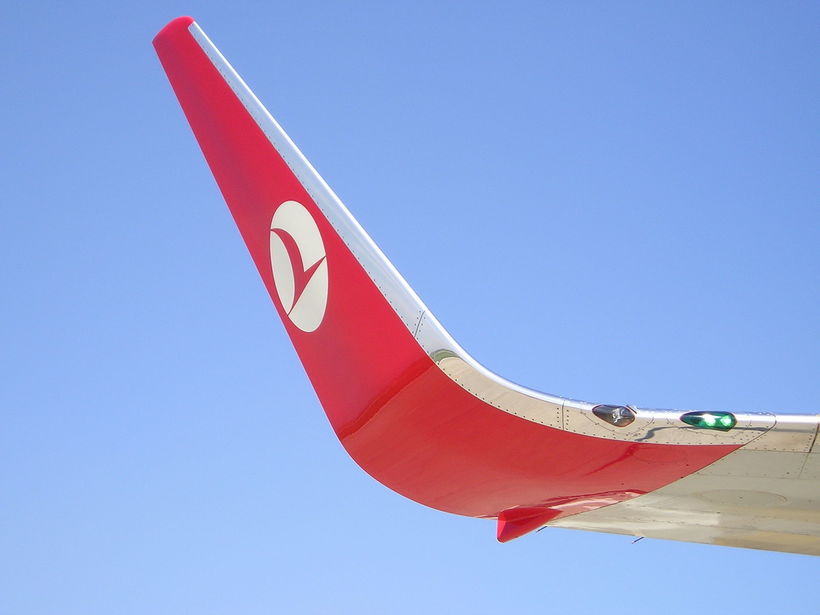
Если опустить сложные моменты аэродинамики, то упрощенно полет самолета выглядит следующим образом. Подъемная сила крыла самолета возникает из-за разности давления: над крылом формируется область пониженного давления, а под ним — повышенного. Но при этом воздух из области пониженного давления, то есть из-под крыла, постоянно перетекает наверх, в область пониженного давления. В результате этого процесса во время полета на конце каждого крыла образуется мощный воздушный вихрь.
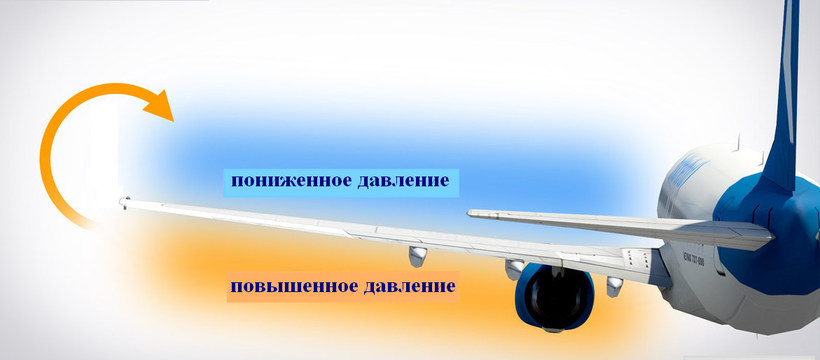
Эти вихри увеличивают индуктивное сопротивление и как следствие снижают подъемную силу крыла и увеличивают расход топлива. Но этот негативный эффект можно уменьшить. Одним из первых, кто понял, как это сделать, был американский инженер Ричард Уиткомб. В начале 70-х годов прошлого века он сконструировал элемент крыла, так называемую законцовку крыла, которая стала применяться на практике, и уже в 1975 году первые самолеты с модифицированными крыльями стали летать в воздухе.
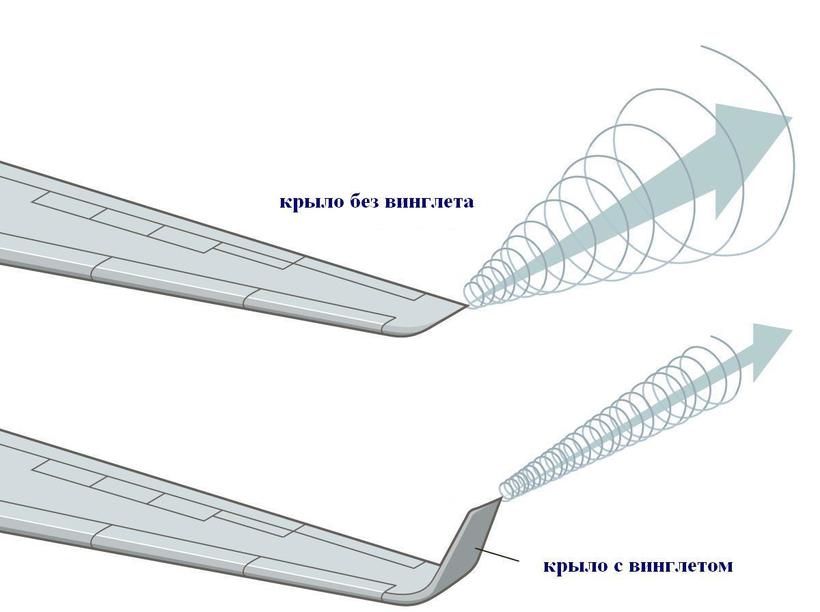
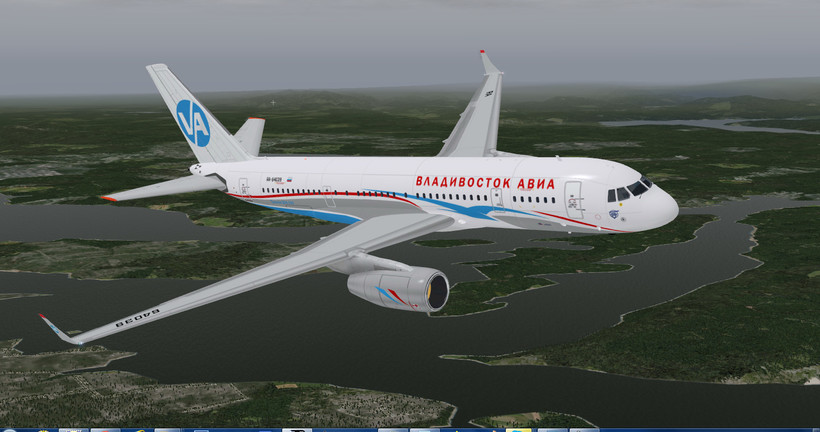
Как показали исследования, винглеты снижают силу образующихся вихрей и уменьшают индуктивное сопротивление. Как следствие, происходит снижение расхода топлива. В последующем инженеры разработали несколько моделей винглетов, которые применяются на разных моделях самолетов серии Boeing и Airbus, на российском Ил-96, Ту-204 и других.
Проведенные замеры выявили экономию топлива на 3,5-5,5% в зависимости от типа винглетов. Это очень существенный показатель для авиации, да и выбросы вредных веществ в атмосферу тоже снижаются. Но винглеты имеют существенный положительный эффект лишь при дальних перелетах, а вот при непродолжительном полете эффект от их установки незначителен. К тому же при взлете и посадке в условиях бокового ветра винглеты могут усложнить работу летчиков, дестабилизируя положение лайнера.
Присоединяйся к нашему сообществу в телеграмме, нас уже более 1 млн человек ��
Для чего крылья самолетов загибают по краям
Летая на современных авиалайнерах, вы могли заметить характерные изгибы на законцовках крыла, которые обычно называют винглетами (от англ. «winglet» — крылышко). Их форма может существенно отличаться в зависимости от самолета, но в том или ином виде они встречаются на большинстве современных моделей.

Впервые о применении винглетов в коммерческой авиации заговорили в начале 1970-х годов. Тогда из-за резкого скачка цен на нефть повысилась стоимость авиационного керосина, и инженеры стали искать способы снизить расход топлива на самолетах. Одним из таких инженеров был американец Ричард Уиткомб.
Наблюдая за полётом орлов, он заметил, что перья на концах их крыльев отклонены вверх. В конечном счете именно эти наблюдения и вдохновили его на создание винглетов. После исследований, проведенных Ричардом вместе с NASA, эффективность винглетов как средства экономии топлива была доказана, но как же это работает?

Во время полета под крылом образуется область высокого давления, а над крылом — область низкого давления, благодаря чему и появляется подъемная сила, позволяющая самолету находиться в воздухе. Однако из-за разницы в давлении воздушные массы стремятся «перетечь» из-под крыла наверх. Наиболее короткий путь для этого располагается на законцовках крыла, именно там эти потоки воздуха создают завихрения и снижают подъемную силу.

Чтобы скомпенсировать снижение подъемной силы, двигатели самолетов вынуждены работать на более высокой мощности. А установка винглетов препятствует перетеканию воздушных масс и образованию завихрений, что способствует экономии топлива, увеличению максимальной дальности полета и снижению уровня шума.
Винглеты — это не единственное решение проблемы с завихрениями. Известно, что они становятся тем слабее, чем больше удлинение крыла. Впрочем, существенно увеличить длину крыла конструкторам не позволяют ограничения, введенные Международной организацией гражданской авиации (ICAO). В частности, размах крыла среднемагистрального самолета не должен превышать 36 метров. Ограничение введено для удобства и безопасности работы с аэродромной инфраструктурой.
 Крыло Airbus A320
Первым пассажирским авиалайнером с винглетами стал Boeing 747-400 в 1985 году. С тех пор конструкция винглетов совершенствовалась, этому способствовало широкое распространение композитных материалов в самолетостроении. Эффективность данного элемента конструкции сильно зависит от конкретной модели самолета и дальности маршрута. Современные исследования показывают, что в среднем по отрасли эти приспособления снижают расходы на топливо на 3.45%. Наибольшую эффективность они продемонстрировали на Boeing 737-800, где расход топлива снизился на 10.49%.
Evolution of Winglets

Modern aircrafts have a lot of complex and intricate moving parts that work together to operate a safe flight. One of the most striking parts nowadays could arguably be seen at the end of the wing, where the winglets are. Just as the how aircrafts themselves are coming up in different shapes and sizes, the winglets are too, adding a whole new element to the aesthetics of the airplane. The fact that engineers and designers have constantly played around with winglets over the years show that it is an integral part of the aircraft. But they have not always been this way, this paper would look at how winglets have evolved in the history of aviation and discuss the grounds and motivation for manufacturers to tweak them.
Historical Facts
The initial idea of winglets could be dated back to 1897 when an English engineer named Frederick W. Lanchester saw that to control the wingtip vortices, a wing-end plate could be attached to the end of both wings. Like many inventions, he found inspiration from nature, he saw that flying eagles would have their feathers upturned at their wingtips and incorporated this design to his model gliders. A more functional wing end was developed in 1910 when Scottish engineer William R.Sommerville patented his idea and manufactured it on his early biplane and monoplane designs, it was the first practical application for the curled wing ends. Interestingly, the idea was even taken to court by the well-known Wright brothers on possible patent infringement, but was later dropped. Going off-topic, it is fascinating to note that the pre-eminent Wright brothers had waged lots of prolonged, embarrassing and mostly unsuccessful battles in courts against other early aviators who also contributed to the aeronautical principles that are used today.
The World Wars had a huge impact on the developments of aircrafts as nations left no stones unturned even using airspace to their advantage, this pushed rapid growth and ideas into fruition as fast as possible. The end of the second World War saw Dr Sighard Hoerner write a research paper calling for ‘drooped’ wingtip devices. The feature meant that the pointed rear tips concentrated the resulting wingtip vortex away from the wing surface, reducing the drag caused on the wing itself. They eventually became known as ‘Hoerner tips’ later in his honour, many gliders and light aircraft have also used Hoerner tips to their advantage for many years.
Since then it was only known as tips or end-plates as the term ‘winglets’ only came into play when NASA’s Richard Whitcomb conducted his set of tests. With the help of the facilities in Langley Research Center, he experimented with computer-aided machines and wind tunnel tests to inquire his hypothesis of a vertical wingtip device which he later coined the term as “winglets”. His analysis on his investigation showed that winglets could weaken wingtip vortices and therefore diminish induced drag, more on this later.
Whitcomb’s groundwork garnered a lot of interest in not only civil but also military aviation communities, directing to aerodynamic testing that could substantiate his predictions.
Working Principle
It is well-known that winglets are used because it reduces induced drag which is a component of drag that is a consequence of producing lift by a finite wing but why so. If it is said to be that there is lift produced by a wing, there should be higher pressure below the wing than over it. Therefore, there is simply a flow around the wingtip from the high pressure region to the lower pressure side. To put in another way there is spanwise flow in the 3D wing that is not present in the infinite 2D wing, this spanwise flow is spread and felt across the trailing edge as the flow leaving the upper surface flows inward meeting the lower surface flows moving outward. As these opposing flows meet at the trailing edge gives rise to a swirling motion that concentrates into tip vortices. Distinctly, the generation of these tip vortices requires energy and the transfer of this energy from the wing to the outside air is induced drag.
The goal comes down to minimizing this drag by consequently minimizing the energy that is being wasted in creating an unnecessary flow which is the spanwise and also the rolling up of the tip vortices. It is important to mention that induced drag also depends on the wing itself, that is how efficiently it produces lift. By my knowledge, it is pronounced that as a starting point, that the most efficient planar wing is that of the one that has elliptical loading i.e. lift is greatest at the root and gradually decreasing toward the tip.
Having endplates at the tip of the wind has been known for a long time that it could reduce the spanwise flow and consequently the induced drag. Being an avid Formula1 fan, I know that the race cars have end plates attached to their front and rear wings, as it increases the aspect ratio without compromising the need to increase its wingspan, making the use of more downforce which could be thought of as negative lift helping the car to “stick” to the ground when travelling at high speeds giving the drivers the much needed grip especially in corners. This is similar to the use of that in aircrafts too but it is not very effective. It is because the endplate must be so large that the substantial increase in skin friction drag due to the excessive wetted area must be able to override the reduction in induced drag, so as always as it is in aviation it is a game of tradeoffs and balance.
To combat this, Whitcomb’s infamous paper proposes winglets that do one better . He mentions how endplates just act as a plain “fence”, and what it should do is rather carry aerodynamic load like a winglet. With the introduction of winglets, it can produce a flow field that can interact with the main wing to reduce the spanwise flow. The bottom line is that the spanwise induced velocities from the winglet would oppose and thereby cancel out those generated by the main wing.
Multiple experiments show how the addition of winglets has reduced the downwash effect by diffusing out the influence of the tip vortex reducing induced drag. As mentioned before, endplates are much like winglets in reducing the spanwise flow but as it is carrying an aerodynamic loading that is not present in the endplates, the winglet achieves it without exposing more wetted area. The crux for winglet designers is to find ways to gain most reduction in induced drag for the least increase in profile drag.
Motivation for developing efficient winglets
Operating an airline is not an easy business considering the huge costs and the potential risks involved. The Oil Crisis in 1973 after the Arab states put on an Oil embargo on the United States for providing aid to the Israelis in the Yom Kippur War. Since then, aviation became more commercialized and prices of fuel spiraled upwards as a result, this prompted many airlines and aircraft manufacturers to look for ways to improve their operating efficiency of their aircraft.
As seen in the previous section, winglets could reduce the induced drag produced meaning that the overall drag with other things kept constant is also reduced. The engine therefore can burn less fuel for aircrafts with specialized winglets than otherwise, cutting significant costs for airliners and thus a key area for them to always keep an eye on. Winglets tended to become one of the best innovations in the industry as it can save a sizable amount of fuel and is still ever expanding.
Contemporary Winglets
Whitcomb’s design proved key to many of the winglets that could be seen in the present day, but we must take a peek into the 90s where they were initially commercially adopted.
His ideas were put to the test at the Langley research center, where a Lockheed L-11001 and a McDonnell Douglas DC-10 were put under the microscope to prove Whitcomb’s hypothesis of how a perfectly canted and shaped winglet could hold the wings to a same or lower bending moment with simultaneously a smaller wingspan for greater flight stability than the then normal tip extensions. After careful considerations after the successful tests, the MD-11 adopted winglets motivated by the experiments done on DC-10 and was subsequently approved to be flown in 1990. The iconic MD-11 could still be seen today with its prominent center engine at the base of the vertical stabilizer and is one of the few MDs that incorporates a winglet.
NASA itself actually used its application of the winglet on the distinguished 747 Shuttle Carrier aircraft. However, instead of the conventional method of putting at the wings, it was attached to the horizontal stabilizers of the 747. The protruding extended end plate-like shaped winglet was in fact used not for induced drag reduction but for giving it more lateral and vertical directional stability for increasing its effectiveness as it carried the load of the Space Shuttle.
There have been multiple winglet designs explored in the business aviation side and also some for experimental application. But I would like to focus more on the designs on airliners and how it affected them and the industry.
Whitcomb’s preliminary research actually described one of the most common winglets that is seen on most Airbus’ aircrafts nowadays, which is the wingtip fence. These winglets’ surfaces extend not only on top but also below the wing resembling an arrow-like structure.
The first to employ this were the Airbus A310–300 which was made from an innovative composite material at that time in 1985. The A320, A300–600 and even the initial models of the A380 had the wingtip fence design but the derivatives of them had different ones. The wingtip fence manufacturers for Airbus RUAG Aerostructures claims that the A380 produces less resistance with high lift coefficients, better stability around the lift axis of the aircraft and greater maneuverability around the longitudinal axis as the lift coefficient is increased at the wing tips which correlates to the experiments done by Whitcomb.
These winglets are short and upward-sloping wedges that sit at the end of the wing. The CFD analysis on how the optimal combination of cant and sweep angle of the winglets shows how it increases the lift coefficient at different angles of attack.
The 747 touted as Queen of the Skies which was first made in the early 1960s made a huge influence in the development of the booming aviation industry but it wasn’t till 1985 when the -400 model employed canted winglets. The 747–400 was introduced as an extended range and capacity as the fusion of winglets and the increased span allowed it to carry additional loads. It is said to increase the range by over 3.5% over the brother -300 model which is aerodynamically identical barring the canted winglets. Boeing is famous for using derivative designs only on existing platforms as they could allow for the maximum re-use of their existing components.
Canted winglets were known to be the first winglets on many aircrafts such as the infamous workhorse A330 and A340, the Russian Tu-204 and the Bombardier CRJ 100/200.
These winglets suggested by the name are called blended as they feature a much smoother transition from the wing itself to the winglet. Because of this it can reduce the interference drag at the meeting of the winglet and the wing. But at the same time, the sharp interior angle in the junction means that it can interact with the boundary layer flow which may cause a drag inducing vortex, taking away some of the winglet advantage but nevertheless effective in doing its job of reducing overall drag.
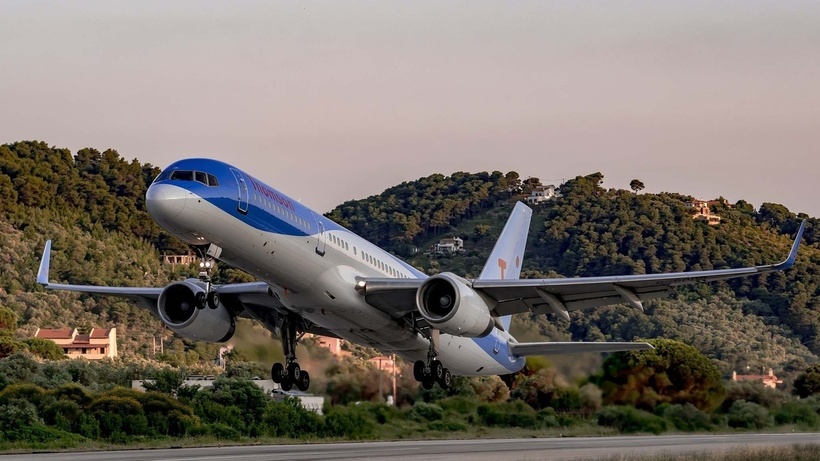
Boeing were the first to take up this design as they made it an option for the 737–800 model in the early 2000s, in fact many of the 737 models actually have blended winglets and it is not uncommon to spot them as it the best-selling jetliner at the moment. After the effects of it became more known and pronounced as the fuel consumption went down coupled with the fact of increasing range, it was retrofitted into many of the 757s and the 767s that are in service today.
The arch nemesis of Boeing, Airbus meanwhile also introduced the blended winglets on its aircraft mainly the newer members of the A320 family but marketed them as “Sharklets”. It is noteworthy that the Sharklets stirred a bit of controversy and caused Airbus to be involved in patent issues with Boeing which ultimately saw Airbus as losers as they had to pay an undisclosed settlement fee in the end to the American manufacturer.
At first glance aircrafts with raked wingtips do not look like they have winglets, raked wings per se does not have a winglet attached to it. But the tip of the wing itself is swept back compared to the rest of the wing. However, like winglets it does diminish wingtip vortices and drag overall. Boeing mentions raked wingtips could reduce drag by as much as 5.5% compared to the 3–4.5% for conventional winglets owing to mainly the reduced weight.
The 787 Dreamliner, some of the 777s and the 747–8 models all comprise of the raked wingtips, not winglets. For the 787, the raked wingtip is evidently slighted upward in comparison to other models. In my opinion, in the development process of the wing, Boeing might have seen that the added weight of a traditional winglet did not outweigh the efficiency gained by the raked wingtip and could possibly be the reason why they did not use the blended winglet for their flagship Dreamliner.
The A350 wing design however is a curious case as it sports a distinctive and snaky winglets and even though Airbus classifies it as a Sharklet, it does not strikingly resemble that of the A320 neo’s. Unlike that of an A320, this is part of the design since day one of the manufacturing process and is not retrofitted. This design could be Airbus’ way forward as the A330 neo has the same configuration. Airbus points out the A330 neo could fly more than 15% nonstop compared to its counterpart the A330–300 model which is remarkable though there are other key changes apart from the wing composition.
These scimitar sword-looking winglets hence the name is similar to the classical wingtip fences as they have the physical shape above and below the wing. The design could be thought of as a crossover between a wingtip fence and the raked wingtip making it essentially a blended winglet with an extra airfoil at the bottom. The 737 MAX is a prime example of the split-scimitar wings although they are slightly different citing “detailed design, surface materials and coatings” that enable a laminar airflow over and under the winglet. It is noteworthy that these winglets have no correlation to the two fatal accidents that led to the grounding of the aircraft.
Future Winglet Concepts
Ever since the first research and design for winglets, there has been a continual improvement in the efficiency and also structural development of them owing to better infrastructure and advancement in technology. Engineers have been relentlessly striving for better and improved aircraft performance and not settling for anything less.
The Airbus AlbatrossONE in its initial stages tested for freely flapping wing-tips that can alleviate wing loads and avoid tip stall. In July 2020, in its successful second flight test the AlbatrossONE featured ‘semi-aeroelastic’ hinged wingtip that could inspire future aircrafts. Again, taking inspiration from nature, the aircraft is based on the albatross seabird that has an eerie ability to travel over long distances with little fatigue inspired engineers to put to the test its freely-flapping wing-tips that is capable of reacting and flexing to wind gusts in real time.
In its demonstration, the small-scale, remote aircraft first had its wingtip locked at a right angle at the gates and unfolded them on the runway. During takeoff, the wingtips were unlocked allowing it to ‘flap’ before lift-off for improved roll control. At climb and cruise, the wingtips were locked flat to minimize drag. When hit with severe turbulence or manoeuvre, the wingtips are unlocked to freely flap to manage gust and manoeuvre load. The wingtips recovered and locked flat for efficient cruise and could return to the normal upright position upon landing.
This could be the future as Boeing is also following a similar pathway as the avant-garde 777X’s hallmark feature is the active wingtip. The 777X wing is based upon the 787 but with 10% increased surface area. It works on the design of the fold mechanism, locking pin and latches and is as strong and tough as any of the other flight control systems. Albeit the safety of it has come under scrutiny, it has been approved by the FAA as Boeing have proved that the wingtips are manufactured as any other flight critical system. It is to be noted that the 777X has already had its first flight in early 2020 while that of the AlbatrossONE is still in its early stages.
Both of these winglet designs come with great benefits aerodynamically as it can control the shape of its wings to adapt to the environment providing optimal flight conditions such as a large aspect ratio when cruising and also reducing drag for an efficient flight and could possibly be setting a trend for the future.
Personal Thoughts
After looking into many aspects of the winglet from its history to present day technology, I am amazed at how far we have come from the preliminary wing development stages to now. It is also not surprising to see engineers and designers working on minute details to make things more efficient and not settling for what they already have and it is actually one of the reasons why engineering is seen as fascinating to most people.
After reading some corporations’ press releases on their development of winglets and their goals, it is not hard to see that they focus on the monetary benefits of saving fuel as they could cut costs. But only some and only recently do companies value the environmental impact of an innovation like the winglet. As the wingtip design produces less drag, even a few percent could correspond to reduction of hundreds of tonnes of CO2 annually. And in the current world where the climate change situation is becoming more dire by the day, as a community I think making innovations more ecocentric and also having overarching principles of sustainability over other benefits would prove useful in the long run and it is pleasing to see that the aviation industry is following suit.
Researching winglets has helped me shed light on how prevalent patent issues are and their ramifications. From the Wright Brothers to a modern day giant like Airbus, many of them were involved in copyright problems and paid a hefty and literal price for it, demonstrating how being a pioneer in a field pays in any era.
Moreover, it is also fascinating how an oil crisis was the reason for sparking a development in the area of winglets and it shows how humans flourish in hardship. The coronavirus pandemic has really hurt the aviation industry as the world was brought to a standstill but it has made governments and airlines rethink its strategy and its operations, so definitely there would be a lot of invaluable lessons and brilliant ideas that would have come about in this critical period which can possibly shape the future of aviation.
To cap it off, as an avid plane spotter, the winglets of an aircraft have been one of the key elements that I look for when differentiating models and so learning about them more in detail has helped me have a greater sense of appreciation and understanding for them while also having had a lot of fun digging deep into it.
Винглеты: для чего у самолетов сделаны скругленные «законцовки» крыльев и почему у некоторых их нет
Получайте на почту один раз в сутки одну самую читаемую статью. Присоединяйтесь к нам в Facebook и ВКонтакте.


В наше время авиакомпании все больше внимания уделяют расходу керосина в самолетах. Все потому, что топливное обеспечение авиалайнера может составлять от 30 до 50 процентов расходов на его содержание. Снизить расход топливо можно за счет создания все более эффективных двигателей. Каждое новое поколение позволяет сократить расход от 5 до 20 процентов. Также горючее можно экономить при помощи улучшения аэродинамических качеств, правда здесь добиться новых высот инженерной мыли крайне сложно, так как самолету уже достигли аэродинамической максимы развития.

Аэродинамическое сопротивление состоит из трех компонентов: сопротивления трения, давления, а также индуктивного сопротивления. Сопротивление давления зависит от формы обтекаемого тела. Сопротивление трения зависит от ровности обтекаемого тела. Наконец индуктивное сопротивление создается за счет разницы давления воздуха над крылом и под крылом (вверху давление всегда меньше и именно это создает подъемную силу). И здесь начинаются проблемы.

Дело в том, что воздух средней и корневой части крыла самолета перетекает от передней кромки к задней более-менее равномерно. Однако, ситуация полностью меняется когда речь заходит о законцовках крыла. Воздушный поток естественным образом стремящийся перейти из зоны высокого давления в зону низкого давления переходит из-под нижней части крыла в верхнюю. Более того, поток закручивает и образует вихрь. Это в свою очередь повышает уровень индуктивного сопротивления, а вместе с ним и расход горючего самолета.

Эту проблему решают несколькими методами. Первый – это использование специальных насадок на законцовках крыльев. Второй – удлинение крыла. И третий – использование винглетов. Последние появились в 1980-е годы на фоне топливного кризиса, когда авиакомпании всерьез стали задумываться об экономии горючего. Само собой, о технологии винглетов человечество знало задолго до этого. Встречаются они даже на некоторых моделях самолетов из числа первых.

Примечание : сегодня винглеты есть фактически на всех гражданских авиалайнерах, в том числе отечественного производства. Если ничего подобного на крыле нет, то скорее всего у самолета удлиненная форма крыла для решения тех же проблем с аэродинамикой.